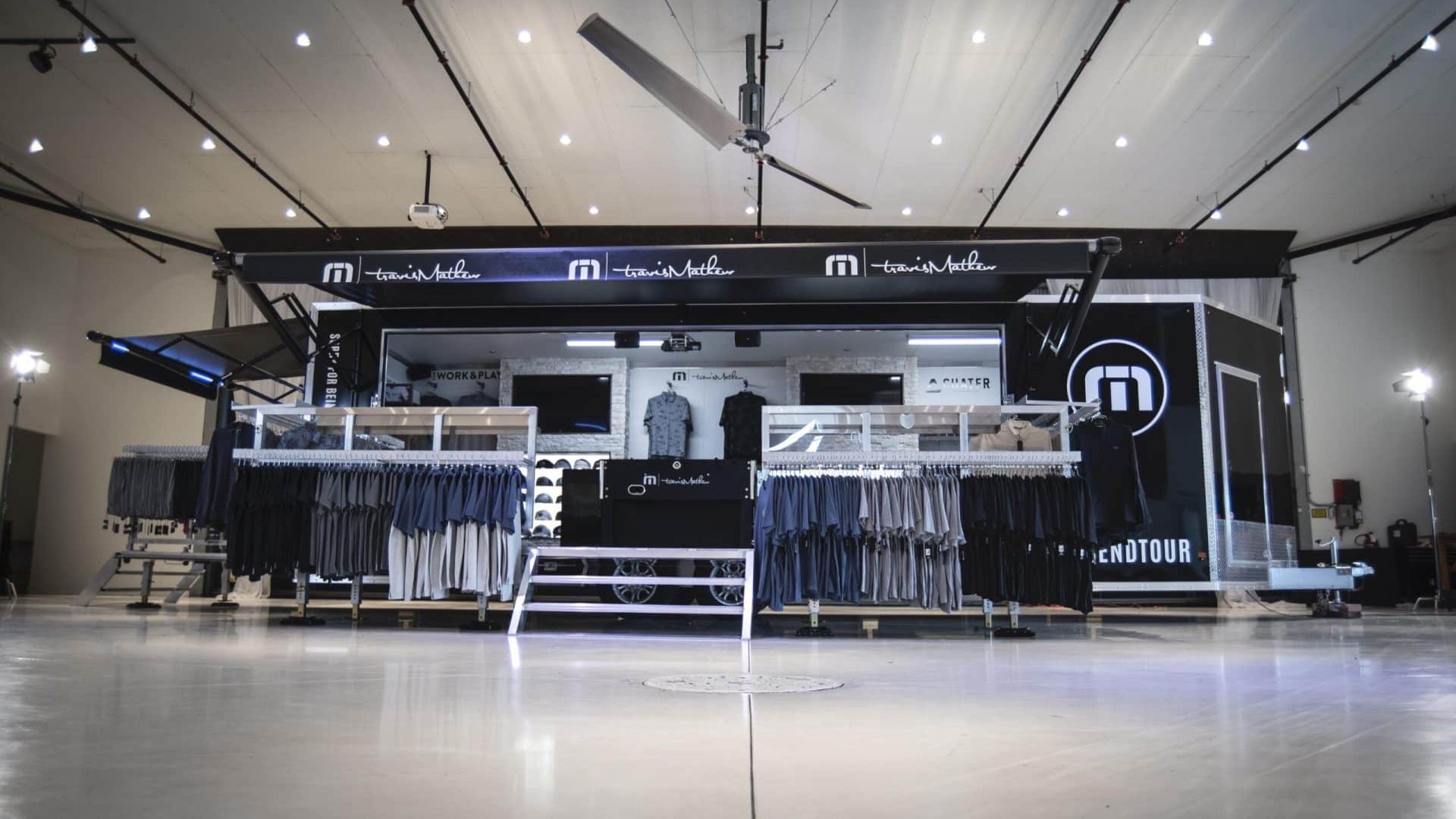
The mobile tour vehicle is not a container for your experience. It is the first thing your audience sees, the constraint that shapes your spatial design, and the logistics backbone of your entire tour. Choosing the wrong vehicle does not just cost money. It limits what your program can achieve.
Here is a practical comparison of every major mobile tour vehicle type, with real day-rate ranges, footprint data, permit complexity, and the 5-year total cost of ownership that matters when you are actually writing a check.
Mobile Tour Vehicle Selection Is a Strategy Decision
Before comparing specs, clarify three things:
- What is the primary objective? Product sampling has different spatial needs than product demonstration. Lead capture requires different flow than immersive brand storytelling. The experience drives the footprint, not the other way around.
- What is the tour geography? Urban-core activations in downtown Vancouver or Toronto have parking and access constraints that suburban or campus activations do not. Vehicle size directly determines where you can and cannot go.
- What is the annual utilization? A vehicle used 5 times per year should be rented. A vehicle used 25 times per year should be owned. The break-even math is clear and we cover it in detail in our budget-conscious programs guide.
Eight Vehicle Types Compared
The eight platforms below cover the vast majority of mobile tour programs1. Sizes, day rates, and permit complexity are drawn from Sequoia operational data and industry benchmarks.
What the day rate includes (and what it does not)
Included: the vehicle itself, a standard rental-grade interior fit-out (fixed shelving, counters, and lighting appropriate to the vehicle type), vehicle insurance, and basic operational deployment on show day. For smaller vehicles (Sprinter, box truck), a driver/operator is included; for CDL-required platforms (semi-trailer, double-decker bus), you supply or contract the CDL driver separately.
Not included (budgeted separately in our Mobile Tour Budget breakdown): custom fabrication or custom exterior wrap design, fuel and mileage between markets, per-market permits, brand ambassadors and product specialists, site fees, storage between activations, and technology beyond the standard vehicle package (interactive kiosks, custom AV, sensor tracking).
Day rate is the market rental price of the vehicle on activation day. It is what a specialty mobile-tour rental company would charge you per day of use. It already includes an amortized share of the rental company’s acquisition cost, insurance, storage, and standard maintenance across their annual utilization. You do not need to add those separately. Total program cost is typically 2 to 3x the sum of day rates alone once the surrounding operational categories are added (custom fabrication, staffing, fuel, permits).
1. Sprinter Van — 60 to 100 sq ft — $800 to $1,500 per day
Permits: Low. The entry point for self-contained mobile activations. Goes anywhere, fits in standard parking spaces, no CDL required, deploys in under 30 minutes. Best for urban guerrilla marketing, multi-stop days, and street-level activations where agility matters more than square footage.
2. Box Truck (Custom) — 150 to 250 sq ft — $1,200 to $2,500 per day
Permits: Low to Medium. More usable wall space than a Sprinter, easier to brand the exterior, still highly available from rental fleets in every major market. Best for regional tours, retail parking lots, and campus activations. The versatile mid-tier platform.
3. Custom Trailer — 200 to 400 sq ft — $1,500 to $3,500 per day
Permits: Medium. Detaches from the tow vehicle for flexible on-site positioning. Enough space for full experience architecture (Welcome, Core, and Support zones — covered in our spatial-design post). Best for B2B presentations, premium consumer experiences, and festival activations.
4. Airstream or Vintage — 150 to 250 sq ft — $2,000 to $4,000 per day
Permits: Medium. The iconic silhouette does something no other format does: it generates organic social content just by existing. Best for lifestyle brands, social-first activations, and premium positioning where visual identity is part of the pitch.
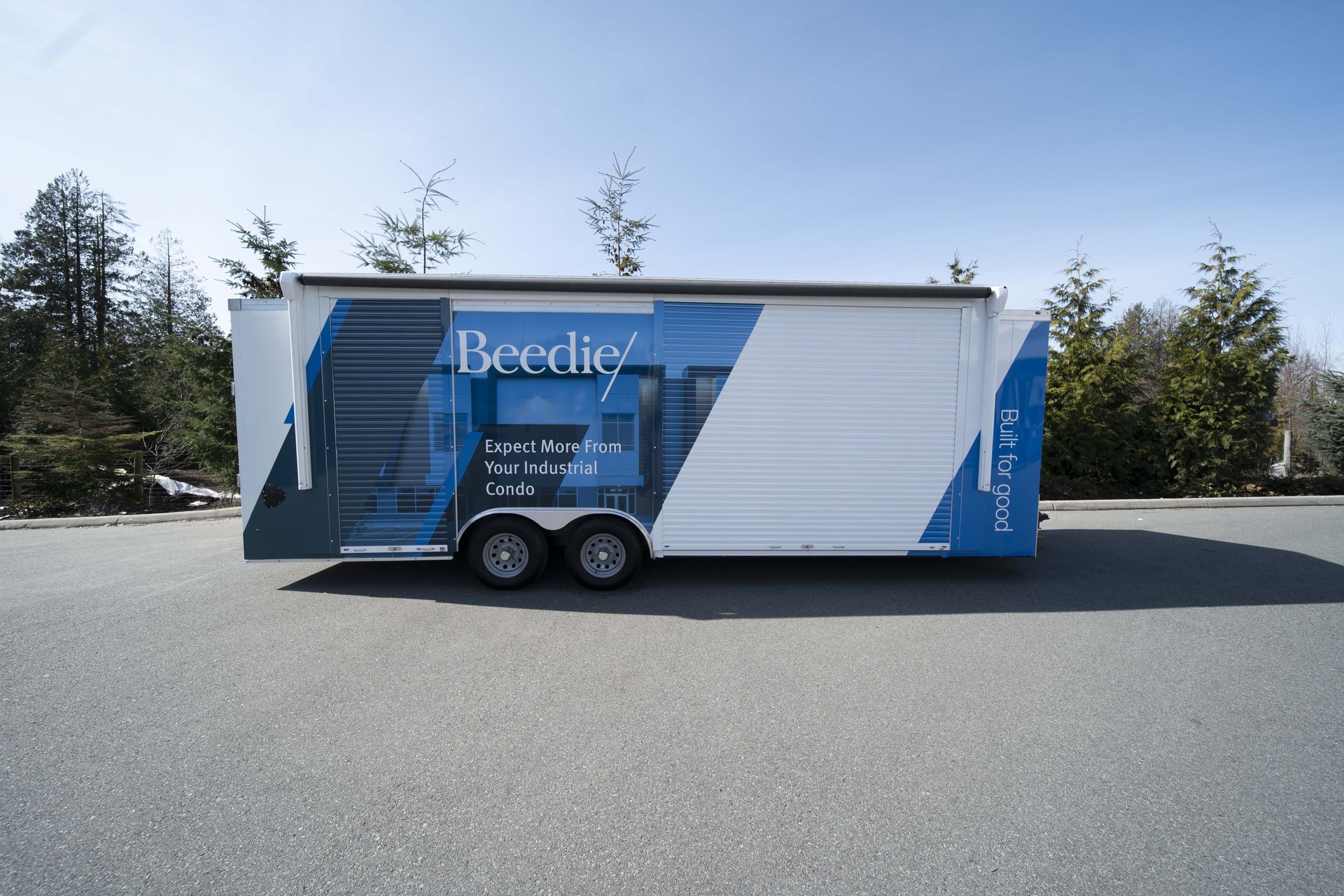
5. Semi-Trailer (Expandable) — 400 to 1,000+ sq ft — $3,500 to $8,000 per day
Permits: High. The flagship format. Maximum space for multi-room environments and integrated technology. Requires CDL driver and tractor unit. Cannot access most urban core locations. Best for national tours, major product launches, and immersive experiences designed to run for years.
6. Double-Decker Bus — 600 to 800 sq ft — $4,000 to $7,000 per day
Permits: High. Maximum visual impact and dual-level experiences. The rooftop level creates unique vantage points and photo opportunities that no ground-level format can match. Best for media events, high-profile launches, and campaigns where the vehicle itself is the story.
7. Pop-Up Container — 160 to 320 sq ft — $1,000 to $3,000 per day
Permits: Medium. Modular and stackable. Suits semi-permanent installations and retail-adjacent activations where the industrial-urban aesthetic matters. Best for brands whose visual language pairs with hard-edged, architectural forms.
8. Flatbed + Custom Build — 200 to 500 sq ft — $2,500 to $6,000 per day
Permits: High. The maximum-creative-freedom option. Nothing to work around: the entire architecture is designed from scratch on a flatbed platform. Best for stage-style activations, wholly custom brand worlds, and campaigns where the vehicle doesn’t need to look like a vehicle at all.
5-Year Total Cost of Ownership
Day rates are the rental math. Total cost of ownership is the ownership math. TCO figures below assume a 5-year hold at 25 markets per year with roughly 2 to 3 activation days per market (~250 to 375 activation days over 5 years), with all-in ownership costs: acquisition, customization, insurance, maintenance, fuel, storage between activations, and annual refresh1.
- Semi-Trailer (Custom): ~$850,000
- Double-Decker Bus: ~$750,000
- Custom Trailer: ~$500,000
- Airstream (Restored): ~$400,000
- Box Truck (Custom): ~$300,000
- Sprinter Van: ~$200,000
To convert TCO into an owned per-day cost, divide by total activation days over the hold period. A semi-trailer at $850K TCO across ~300 activation days works out to ~$2,800 per activation day of owned cost, which is materially below the $3,500 to $8,000 rental day rate. That gap is the ownership advantage at high utilization, and it is why the break-even math favors owning above roughly 20 activations per year and favors renting below that.
Drop the annual activation count and the ownership math inverts fast. A Sprinter at $200K TCO used only 20 days per year over 5 years (100 days total) costs $2,000 per activation day owned versus $800 to $1,500 rental — clearly a “just rent it” call. Match the platform and the ownership decision to the program objectives.
The Decision Framework
- Frequency-first (15+ activations per year, mostly urban): Sprinter or box truck.
- Impact-first (8 to 15 activations per year, mixed venues): Custom trailer or Airstream.
- Scale-first (national tour, 20+ activations, flagship brand program): Semi-trailer or double-decker bus.
- Format-testing (first mobile tour, uncertain plan): Guerilla cube or short-term rental. Learn the format before you buy a platform.
Urban Access: The Factor Everyone Forgets
Semi-trailers require 60 to 80 feet of staging space, height clearance of 13.5 feet, and a tractor-qualified approach route. In downtown Vancouver, Toronto, or Montreal, these requirements eliminate most street-level locations.
Sprinter vans fit in standard parking spots and navigate any street a delivery vehicle can. Check your activation sites before you choose your vehicle, not after. Every mobile tour that ends up compromising its route because the vehicle cannot get there made the wrong decision at spec time.
The right vehicle is not the biggest one you can afford. It is the one that fits the venues, hits the frequency, and pencils out over the lifespan of the program.
Sources
- Sequoia operational benchmarks and 25-market annual TCO model, The Complete Guide to Mobile Marketing Tours, 2026. Complementary industry benchmarks from EventTrack (Freeman / Event Marketer).
Want the full vehicle comparison, permit-complexity notes, and 5-year TCO worksheets? Download The Complete Guide to Mobile Marketing Tours for 62 pages of frameworks, benchmarks, and case studies from brands like the Vancouver Canucks and Travis Mathew.