How to Brief Your Trade Show Fabricator: The 12-Point Checklist
Posted on July 30, 2026

The space between an exhibitor who gets a killer booth and one who gets a costly fell-short can often be tracked back to the briefing stage of a new project.
A vague brief produces a vague booth. A tight one produces the booth you actually meant to describe. Many exhibitors do not brief poorly on purpose. They brief poorly because nobody handed them the list of questions worth answering before the design conversation starts.
Here is that list. Twelve points, in the order they belong, that a trade show fabricator needs to know before they sketch the first wall.
Why the Trade Show Fabricator Brief Matters More Than You Think
Every booth design decision cascades. Wall height determines what fits underneath. Structural material determines what can be reused next year. Meeting-space allocation determines how many staff you need on the floor. When the brief is thin, the fabricator makes those decisions on your behalf, based on assumptions. Some of those assumptions will be wrong. You will not find out until the drayage bill arrives or the first show ends and your team can not remember why the counter was placed where it was.
A good brief flips this. The fabricator becomes an executor of your intent, not a guesser. The design conversation compresses. Revisions drop. The booth that arrives at your first show is closer to what you imagined, because you actually described it.
The 12-Point Fabricator Brief
1. Show(s), booth number(s), footprint
Start with the specifics. Show name, dates, city, booth number, size (20×20, 10×30, island). Corner or in-line. Ceiling height limit per the show manual. This determines every other constraint downstream. The fabricator cannot design without it.
2. Show count over the life of the asset
How many shows will this booth run this year? Next year? Three years out? A booth designed for one show is a different asset than one designed for 15. This shapes the rent-vs-build call (covered in our rental vs. custom framework) and determines whether modular architecture is worth the upfront engineering.
3. Show variants — will the footprint change?
A 20×20 at one show and a 10×20 at another means the fabricator needs to design a modular system that reconfigures cleanly. If the answer is “one footprint forever,” the design can be tighter. If footprints vary, the system must be engineered for it from day one (see the modular booth playbook).
4. The one thing a visitor must remember
Not the list of five things. The one. Every booth that tries to communicate everything communicates nothing. Force yourself to pick the single message the booth must deliver to a stranger in 30 seconds. That message shapes signage, hero product placement, and where the eye lands from the aisle.
5. Primary visitor persona and their buying stage
Who is the ideal visitor? Buyer, influencer, technical evaluator, or press? Are they researching, comparing, or ready to commit? This shapes conversation length, meeting-space allocation, and whether you need private rooms for pricing discussions. A booth optimized for a research-stage buyer looks materially different from one optimized for a ready-to-buy customer.
6. Number of simultaneous conversations at peak
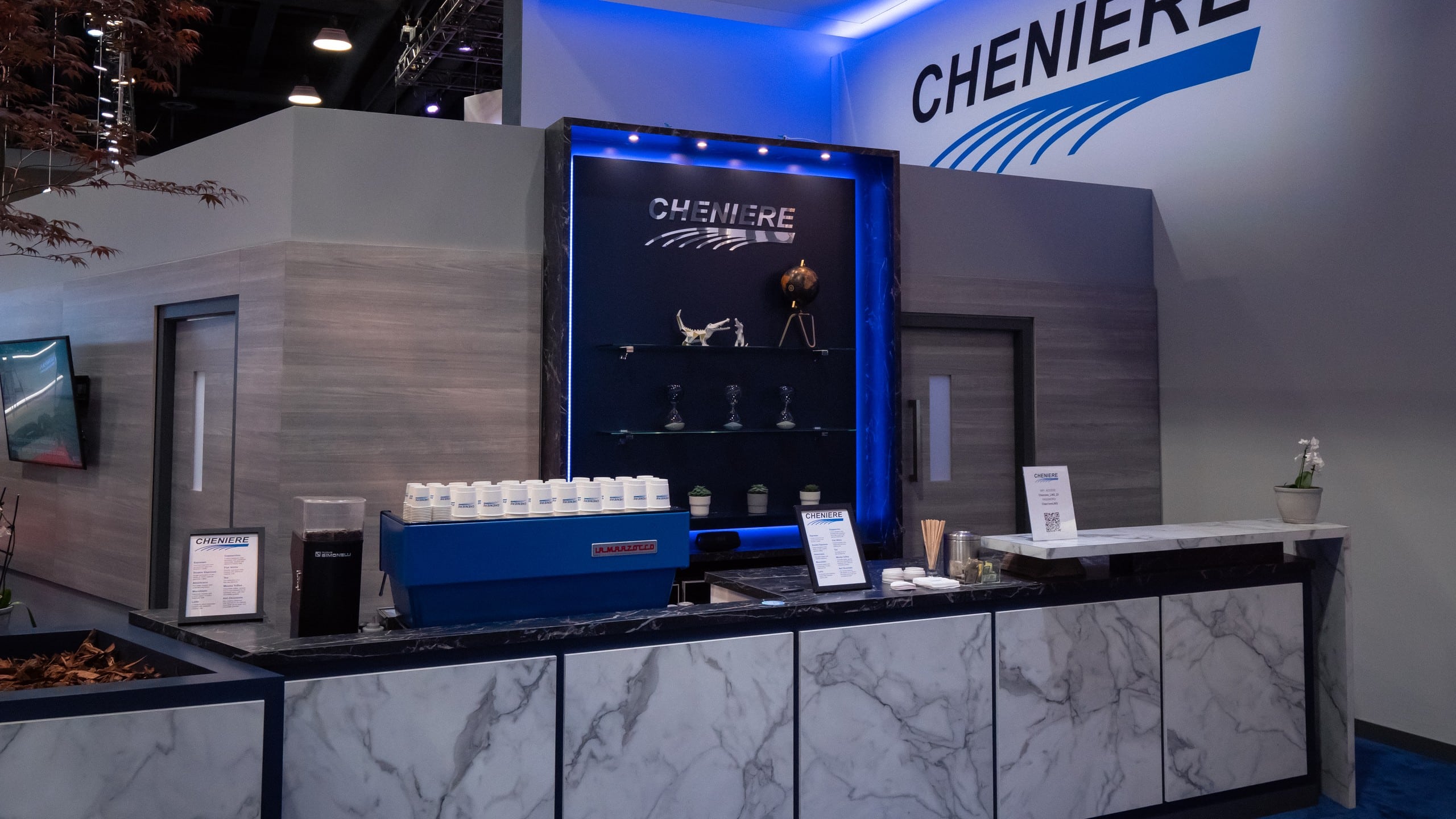
This drives seating count, standing bar footprint, and staffing plan. A booth expecting six simultaneous conversations at peak is structurally different from one expecting sixteen. Undersizing here is a common booth-design mistake, and it is not something a fabricator can fix on show day. It results in a bottleneck in front of your best prospects.
7. Product or demo footprint
What are you demonstrating, and what physical space does it need? A software demo needs a screen and a seat. A hardware demo needs the product, a work surface, and clearance around it. A tasting or sampling activation needs a service counter, storage, and a queue path. The fabricator needs the dimensions before they draw a single wall.
8. Technology integration list
Screens (how many, what size). Interactive kiosks. Lead-capture stations. Video wall. AV or spatial audio. Wi-Fi requirements for demo hardware. Power draw. Each of these has structural implications: mounting points, cable pathways, transformer locations, service panels. Late-added tech is expensive. List everything at brief time.
9. Brand assets — the current version
Logo files (vector, not JPEG). Full brand guidelines. Confirmed color palette in coated and uncoated Pantone plus hex. Approved typography. Any restrictions on how the mark is used (minimum clear space, prohibited backgrounds, do-not-modify rules). If you have a photography library, share it. If you have illustration or motion assets, share them. The fabricator will need every one of these before the first design review.
10. Where the booth lives between shows
Where does the booth live between shows, and do you already have a freight partner or in-house shipping? That is all we need from you. You do not need to arrive with a drayage plan, and you should not be expected to know which unions apply at which venue. That is the vendor’s work, however it helps to control costs when we know the storage and shipping picture early on. What your answer shapes is the choice of road cases, the modularity of the system (fits through standard freight doors), and the estimated per-show logistics cost. A design that requires oversized crates costs more to move than one designed to standard freight dimensions.
11. Budget — the real one
Not “as low as possible.” A real number, and the split between one-time build cost and per-show operating cost. The fabricator will design to the budget you share. Sharing a fake number produces a proposal you cannot afford or a booth that under-delivers. Sharing the real number produces the best booth achievable at that spend.
12. Timeline — with the immovable milestones flagged
Show date is fixed and everything upstream flows from it, which is why this is the point that can leave brands in a lurch. Depending on project complexity, fabricators can need 8 to 12 or more weeks from approved design to delivery. If your window is tighter than that, a custom build may be off the table and rental becomes the answer. Flag the immovable dates in the brief so the fabricator can tell you what is buildable in your window.
Half of this list is strategy only you can answer. The other half, the freight and labour and venue mechanics, is ours.
What Happens When the Brief Is Right
The first design meeting stops being a discovery session. It becomes a working session. The fabricator walks in with informed opinions, options, and specific trade-offs to weigh. Revisions cycle in days rather than weeks. The build cost estimate at the end of design is closer to the actual invoice at the end of build.
Many exhibitors chase the fabricator selection process. They interview three shops, pick one, then start figuring out what they actually want. We recommend that brands reverse the order. Do the brief work first. Then choose the fabricator who best responds to it. The response process itself becomes a filter, because you can see who is asking clarifying questions and who is nodding at everything.
The brief is the highest-leverage document in the entire trade show program. Spend a few days on it and save money and headaches on the build.
Sources
- Sequoia fabrication intake and briefing checklist, 2024 to 2026. Complementary exhibitor-planning benchmarks from the Center for Exhibition Industry Research.
Ready to brief a fabricator on your next trade show program? Get in touch with Sequoia. Or download the Trade Show ROI Guide for the full playbook on plugging the four ROI leaks.