Mobile Marketing Tours: 6 Reasons They Outperform Traditional Ads
Posted on June 9, 2026
Mobile marketing tours are doing what traditional advertising no longer can: changing consumer behavior at scale. The shift has been building for years, but the data now makes it undeniable. Brands that once poured budgets into print, digital display, and broadcast are redirecting spend toward experiential formats that deliver measurable lift on the metrics that matter.
This is a budget reallocation backed by hard numbers. Below are six reasons mobile marketing tours are outperforming traditional ads, with the data and case examples behind each one.
1. The Numbers Behind the Mobile Marketing Tours Shift
91% of consumers report greater purchase likelihood after participating in a brand experience, according to EventTrack’s annual study by Freeman and Event Marketer1. Compare that to the single-digit click-through rates of most digital campaigns, and the math speaks for itself.
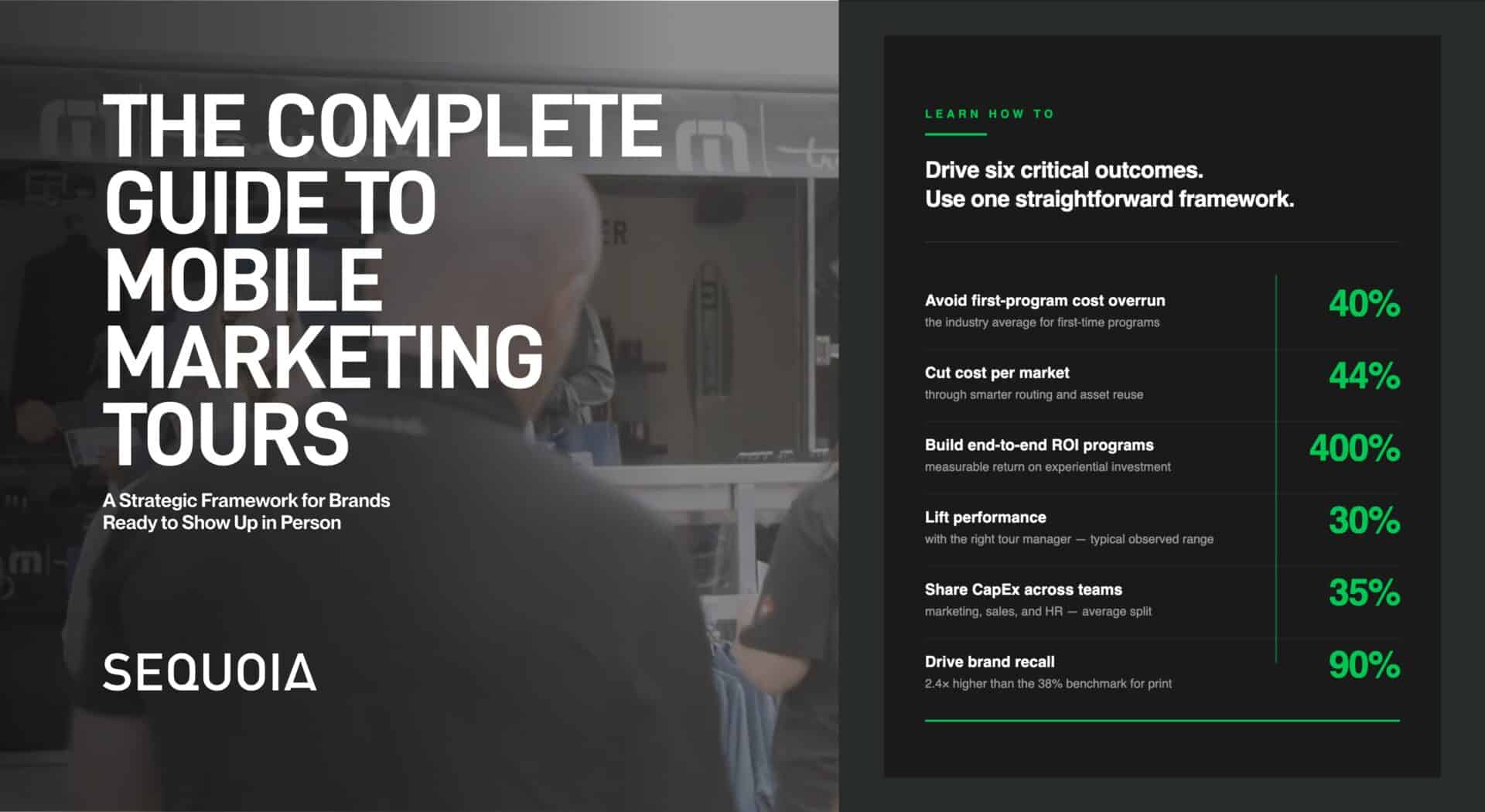
Brand recall tells a similar story. Nielsen’s CPG research2 found that experiential marketing generates 90% brand recall, versus 38% for print advertising. That gap is not a rounding error. It is a structural advantage that compounds with every activation.
The market has responded. Global experiential marketing spend reached $128.35 billion in 2024 (Statista3), and 74% of Fortune 1000 companies plan to increase experiential budgets in 2025 (AnyRoad Experiential Trends Report4). This is not early-adopter territory. It is mainstream reallocation.
2. Why Traditional Ads Are Losing Ground to Mobile Marketing Tours
Attention Is Finite. Access Is Not.
Traditional advertising operates on a broadcast model: push a message to as many people as possible and hope a fraction remembers it. The problem is not reach. The problem is that attention has become the scarcest resource in marketing, and interruptive formats are the worst way to earn it.
Mobile marketing tours flip the equation. Instead of interrupting someone’s content consumption, the brand creates the content. The consumer walks in, spends time, touches the product, talks to a real person. That is not an impression. That is an experience, and the brain encodes it differently.
The Trust Gap
Consumer trust in advertising continues to erode. Edelman’s Trust Barometer5 has tracked this decline for over a decade. People trust what they can see, touch, and verify for themselves. A mobile marketing tour puts the product in their hands, in their neighborhood, on their terms.
When a consumer chooses to walk into your activation, they have already cleared the highest barrier in marketing: intent. They are not being targeted. They are participating.
3. What Mobile Marketing Tours Actually Deliver
Purchase Intent That Holds
The 91% purchase likelihood stat from EventTrack is striking, but what makes it operationally useful is that it persists. Unlike the fleeting awareness bump from a paid impression, mobile marketing tours create memory structures tied to sensory and emotional cues. These are harder to forget and easier to recall at the point of purchase.
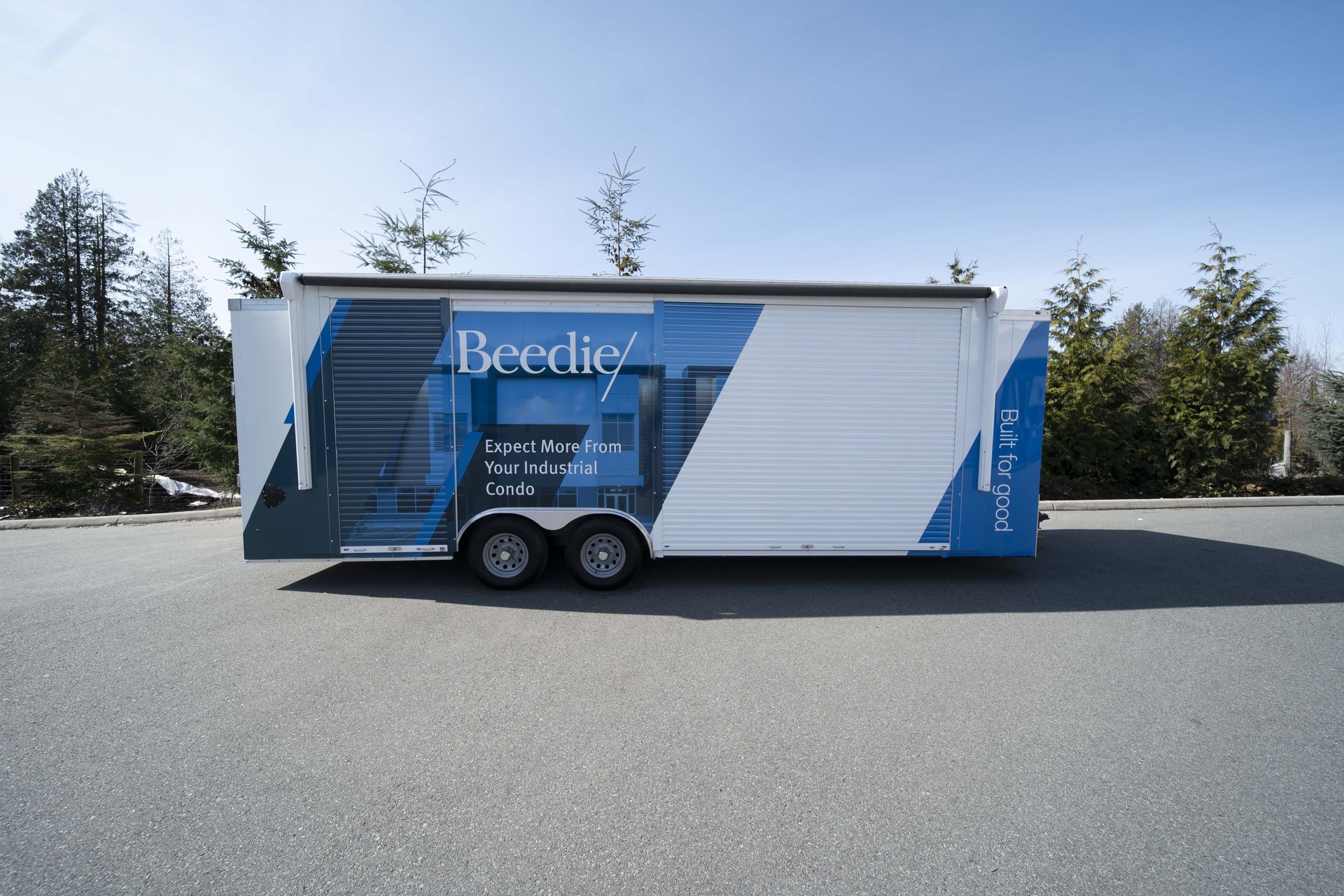
This is why brands like Microsoft, Arc’teryx, and Panasonic invest in mobile activations that go beyond product sampling. They build environments where consumers form their own conclusions about the brand. That self-generated belief is far more durable than any tagline.
Brand Recall That Sticks
90% brand recall is not just a metric. It is a competitive moat. When your customer remembers your brand at 90% fidelity and your competitor’s print ad registers at 38%, you have fundamentally changed the competitive landscape in that consumer’s mind.
The recall advantage comes from multisensory encoding. These activations engage sight, sound, touch, and often taste or smell. Each sensory channel creates a separate memory pathway, which is why experiential recall outlasts every other format.
4. The Business Case for Mobile Marketing Tours in 2025 and Beyond
The $128.35 billion global spend figure is not distributed evenly. The heaviest investment is coming from the categories you would expect: technology, automotive, CPG, and sports/entertainment. But mid-market brands are catching up fast, driven by two factors.
First, the infrastructure has matured. Vehicle options now range from converted Sprinter vans to full semi-trailer buildouts, with rental programs that eliminate the capital barrier. A brand can run a 10-market activation for a fraction of what a single trade show booth costs.
Second, measurement has caught up. The old knock on experiential (“you can’t prove ROI”) no longer holds. Modern programs integrate lead capture, NFC tap, QR-driven attribution, and post-event conversion tracking. 89% of brands now track multi-dimensional experiential ROI1. The data infrastructure exists. The question is whether brands are using it.
5. Who Is Already Investing in Mobile Marketing Tours
The 74% of Fortune 1000 companies increasing experiential spend is a leading indicator, not a lagging one. These organizations have analytics teams that model channel effectiveness quarterly. When three-quarters of them shift budget in the same direction, it signals that the data is conclusive internally, even if the broader market has not caught up.
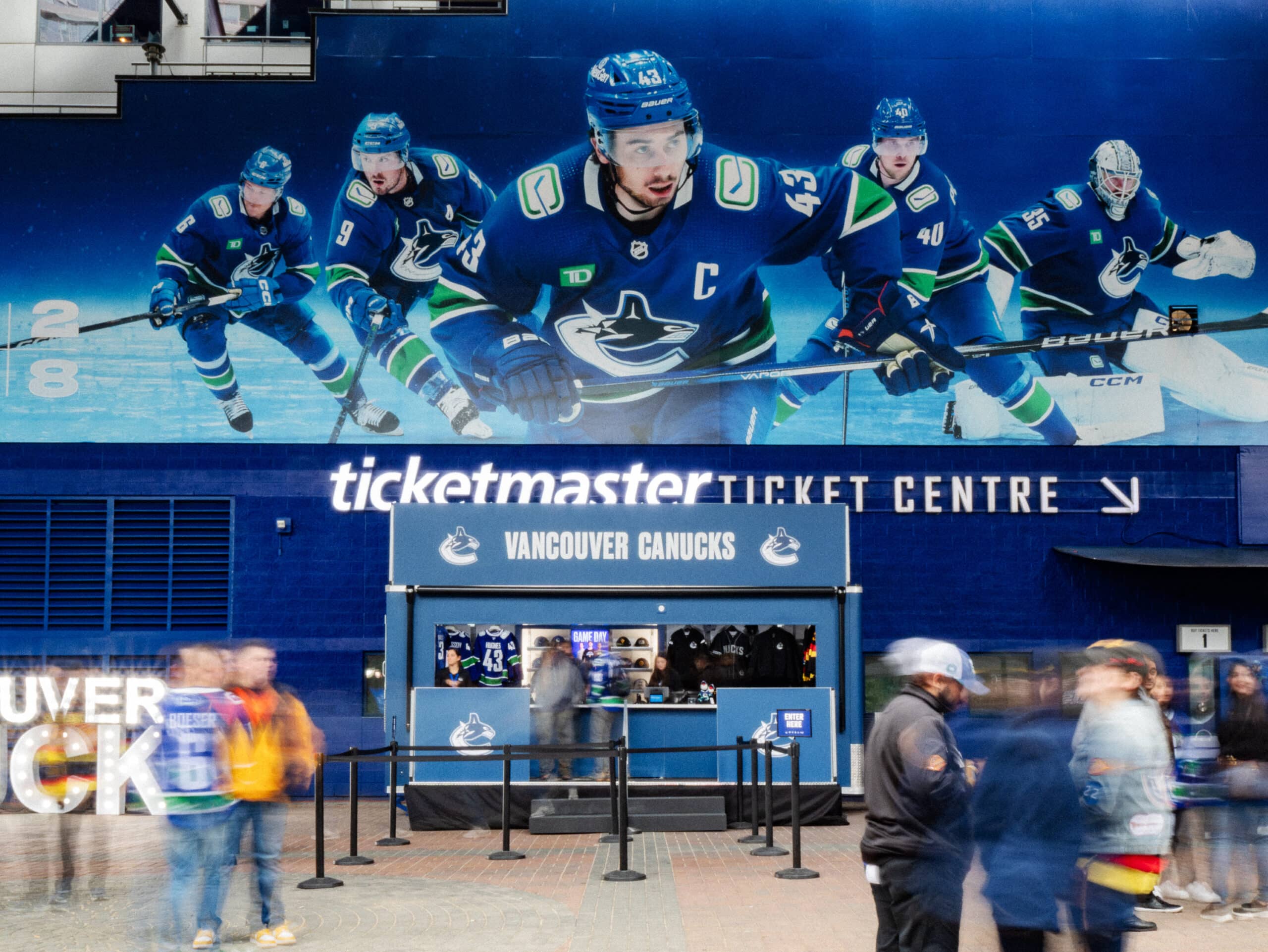
We see this in our own work. Clients like the Vancouver Canucks and Travis Mathew are not experimenting with mobile marketing tours. They are operationalizing them, building modular assets that deploy across 15+ markets and repurpose for multiple use cases. The Canucks achieved 3x asset utilization and 40% cost reduction through modular design.
The brands that wait for the trend to become obvious will find the best venues, routes, and vendor relationships already locked up by competitors who moved first.
6. Where to Start with Mobile Marketing Tours
If a brand is evaluating mobile marketing tours for the first time, the entry point is more accessible than most assume. Budget-conscious programs in the $50K to $150K range can achieve 70 to 80% of the engagement metrics that premium activations deliver. The key is smart design: right vehicle, right route, right experience architecture.
The learning curve is real, but it is not steep. And the data is unambiguous. Experiential outperforms traditional advertising on every metric that matters: recall, intent, conversion, and long-term brand equity.
The question is not whether mobile marketing tours work. It is whether a brand can afford to keep spending on formats that don’t.
Sources
- EventTrack, Experiential Marketing Industry Survey, Freeman and Event Marketer (annual).
- Nielsen, CPG Brand Recall Research.
- Statista, Global Experiential Marketing Spend, 2024.
- AnyRoad, Experiential Trends Report, 2025.
- Edelman, Edelman Trust Barometer (annual).
Want the complete playbook? Download The Complete Guide to Mobile Marketing Tours for 62 pages of data, frameworks, and case studies from brands like the Vancouver Canucks and Travis Mathew.