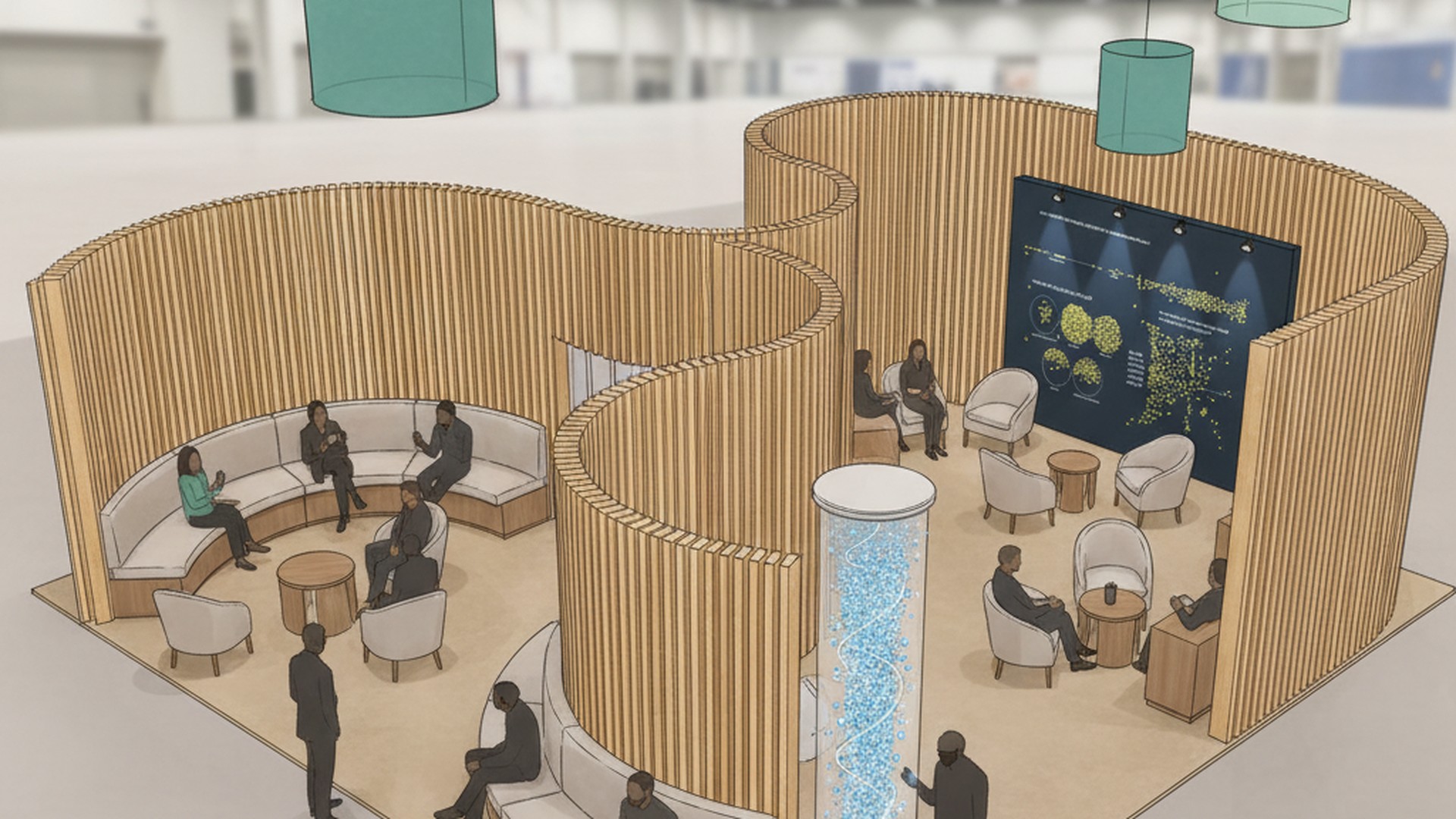
The most expensive habit in trade show marketing is building the same capability twice. A 20×20 for one show. A different 10×20 for another. An island for the big flagship event. Three assets, three storage bills, three sets of graphics, one brand. A modular trade show booth eliminates most of that spend.
The alternative is one modular trade show booth system that reconfigures for every show on the calendar. Same components. Different footprints. Consistent brand. And a materially different total cost of ownership over three years.
The Separate-Asset Trap
Here is how it typically happens. A brand books a 20×20 at their industry’s flagship show. A booth gets designed. Six months later, they book a 10×20 at a regional show and design a second booth for it. A year after that, they need an island for a European event and design a third.
Three separate assets. Three sets of walls, counters, tech mounts, lighting. Three storage crates in three warehouses. Three sets of maintenance and refurbishment cycles. Each asset used at only its native show; the rest of the year it sits.
The total spend is usually 40 to 60% higher than a single modular system delivering the same footprint coverage. And the brand still shows up looking slightly different at each event, because none of the assets were designed to feel like siblings.
What a Modular Trade Show Booth Actually Means
Modular is not the same as “kit of parts on wheels.” A real modular trade show booth system is engineered from the start so that:
- Structural components are dimensioned to a common standard. Walls, columns, and headers slot together in multiple configurations without custom cutting.
- Connection hardware is universal. The same brackets and fasteners work across every wall panel, counter, and tech station. A crew can build an island one week and a 10×20 the next without special tools.
- Technology mounts to standardized brackets. Screens, kiosks, NFC stations, and lighting rigs move between configurations without rewiring or refabrication.
- Graphics are printed to modular panel sizes. Show-specific messaging refreshes cheaply. The structural investment does not.
- The whole system fits in road cases sized to the component inventory. One storage footprint, one logistics chain.
The upfront engineering costs more than a single-purpose booth. Everything downstream costs less.
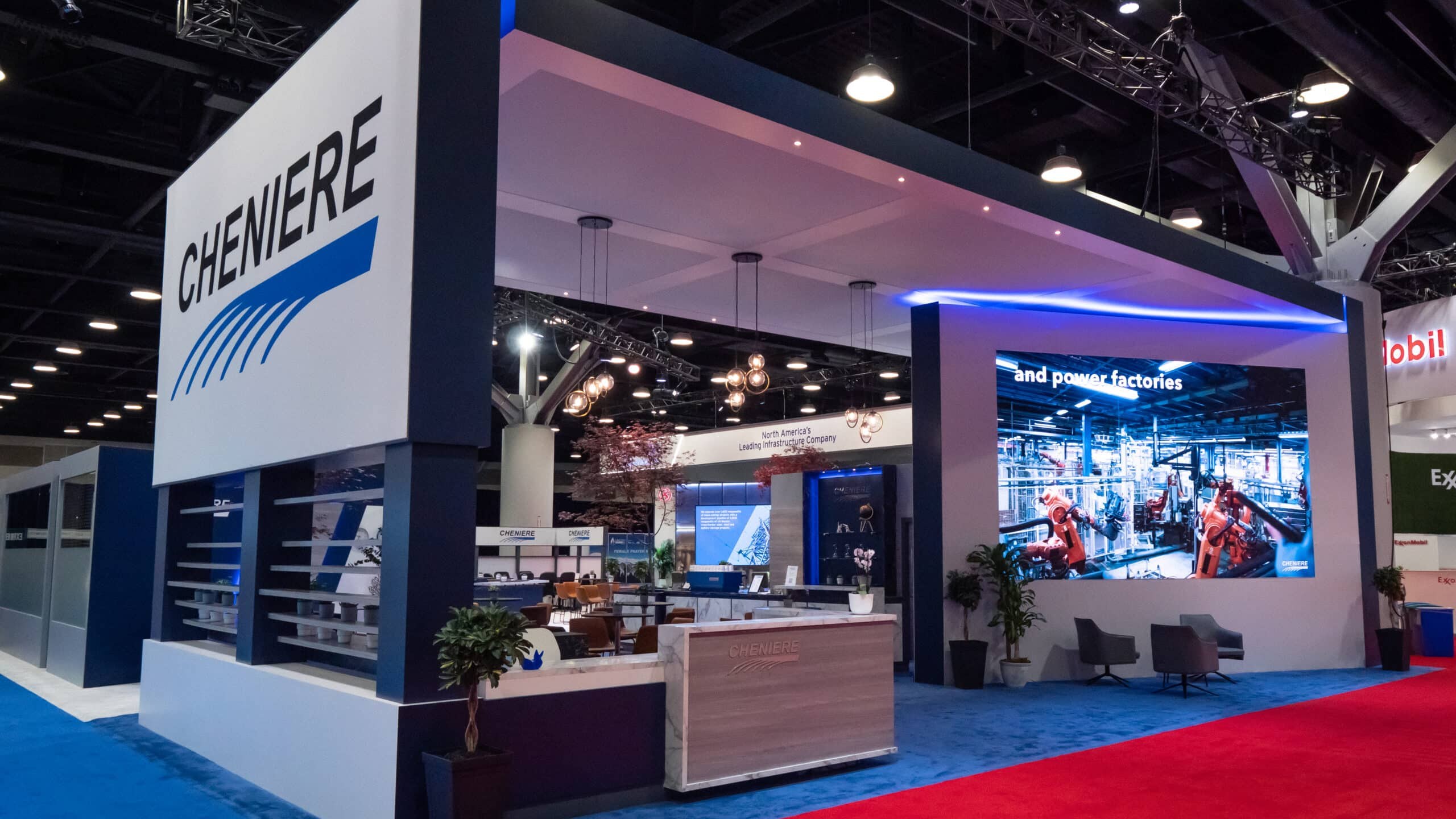
Where the 30 to 40% Savings Comes From
Modular design typically cuts total booth spend by 30 to 40% versus buying separate assets for separate shows1. The savings come from three places.
Shared structural components
Walls, counters, headers, and framing designed to a common standard get reused across every configuration. One set of components covers 10×10, 10×20, 20×20, and island footprints, with the specific arrangement changing per show.
Shared technology
Screens, interactive kiosks, lighting rigs, and demo hardware all move between configurations. You buy the technology once, not per show. Refresh cycles are driven by the tech lifecycle, not by the booth calendar.
Reduced storage and logistics
One modular system lives in one storage location under one maintenance contract. One logistics chain moves it between shows. Separate assets multiply every downstream cost line.
The Brand-Consistency Bonus
Modular saves money. The bigger long-run value is brand recognition across the calendar.
When your booth looks materially different at each show, every appearance is a first impression. When it uses recognizable design language across the calendar, every appearance compounds. Visitors who saw you in Toronto in March recognize you in Las Vegas in September. Industry press starts to identify your presence visually before they read the signage. Recall builds cumulatively rather than resetting per event.
This effect is hard to price in a single-show ROI report but shows up clearly in multi-year exhibitor tracking data. Booths that look like siblings across a calendar year deliver measurably higher aided and unaided brand recall by year-end than booths that reinvent themselves each show.
Six Components That Modularize Well
- Wall systems. Panels sized to fit through standard doorways (typically 3 feet wide, 8 feet tall) with universal connection points.
- Counters and surfaces. Interchangeable tops and bases serving display, service, and powered configurations.
- Technology stations. Standardized VESA-compatible mounting brackets with integrated power and data.
- Lighting rigs. Track-mounted or truss-mounted LED systems that adapt to different ceiling heights and booth sizes.
- Flooring. Interlocking tiles that cover different footprint sizes from the same inventory.
- Signage and graphics. Modular frames accepting interchangeable printed panels for per-show refresh.
Designing for Reuse from Day One
The mistake most brands make is trying to make an already-built single-purpose booth modular after the fact. It rarely works. The engineering assumptions were wrong from the start: bespoke connections, custom-cut panels, technology mounted where the design demanded it rather than where the module standard specifies.
Modular design has to be a day-one intent. That means:
- Standardize connection points before you sketch the first wall. Every panel-to-panel joint should use the same hardware.
- Design for non-specialized labor. The system should assemble with common tools by a two-person crew, no custom shop equipment on site.
- Plan storage from the start. Road cases sized to the component inventory. Do not solve storage after the fact.
- Document every configuration. Numbered setup guides with photos for each deployment layout, so any install crew can execute without institutional memory.
When Modular Does Not Work
Modular is not always the right answer. It underperforms in three specific situations:
- Under 4 shows per year at consistent footprints (utilization too low to earn back the engineering premium)
- Radically different environments per show (a hyper-experiential CES stunt does not share components with a boardroom-style analyst summit)
- Extreme footprint variance (10×10 sample tables and 40×60 hero islands don’t share much beyond graphics)
For most exhibitors running 6+ shows per year across 2 or more footprint sizes, modular design delivers the 30 to 40% savings with no quality compromise. The upfront engineering costs more. Everything after costs less.
One system. Multiple stages. The math is simple.
Sources
- Modular experiential and trade show fabrication benchmarks, Sequoia project data 2024 to 2026, consistent with modular design case study data cited in Sequoia, The Complete Guide to Mobile Marketing Tours, 2026. Complementary exhibitor spending trend data from the Center for Exhibition Industry Research.
Ready to design a modular booth system for your show calendar? Explore Sequoia’s fabrication services. Or download the Trade Show ROI Guide for the full playbook on plugging the four ROI leaks.