
We love trade shows. Love ’em deeply. They deliver something no other channel does: a concentrated, self-selecting industry audience in one room, in a compressed window, actively looking for the kind of thing you sell. For B2B pipeline, for competitive presence, for media and analyst moments, for partner and channel meetings, the trade show earns its line item every year. It is not going anywhere, nor should it.
But the trade show is a specific tool for a specific job. It reaches a specific audience in a specific state of mind. And when that is the only live-brand tool on the calendar, brands leave meaningful ground uncovered, the ground where their customers live, work, and shop the other fifty weeks of the year.
Mobile tours are not a substitute for trade shows. They are a different instrument for a different objective. The smartest brands run both, and the deciding question is not “which one.” It is “which stops on this year’s calendar serve which goal.”
Trade Shows and Mobile Tours Solve Different Problems
Both formats create high-quality brand experiences. What separates them is who they reach, in what mindset, and to what commercial end.
Trade shows are best at
- Concentrating a buyer audience already in the market for what you sell
- Category presence and share-of-voice against direct competitors
- Efficient B2B lead volume in a compressed window
- Partner, channel, distributor, and analyst meetings back-to-back
- Media coverage tied to the show’s news cycle
- Product launches into an audience conditioned to expect them
Mobile tours are best at
- Reaching consumers outside the industry event bubble, in their daily routine
- Longer, deeper engagement moments that build memory and emotional connection
- Brand awareness in geographies and communities that no trade show visits
- Turning a product demo into a hosted, hospitality-grade experience
- Generating organic social content and earned reach
- B2B account-based moves: driving an activation to a prospect’s or client’s headquarters
Neither list is exhaustive. But it makes the point: the two formats do different jobs. A brand that only runs trade shows is not “doing experiential wrong.” It is choosing a particular slice of what live-brand can accomplish. The upside is in adding the other slice.
The Numbers on the Complementary Model
The case for adding mobile tours to the mix is not that trade shows underperform. It is that direct-to-customer activations reach a different consumer moment, and the engagement metrics reflect that.
- 3.5x longer average engagement time at unconventional venues compared to trade show floor interactions1.
- 91% of consumers report being more likely to purchase after participating in a brand experience at an unconventional venue1.
- 47% higher social sharing rate for brand experiences in unexpected, everyday locations1.
These numbers are not knocks on trade shows. Trade show attendees are triaging 26 booths in 9 hours2, which is the format working exactly as designed, and 90-second decisive B2B conversations are often the whole point. The mobile tour numbers reflect a different audience in a different state, with more time and less competing stimulus. Both are useful. Neither replaces the other.
Five Venue Types That Extend the Calendar
When brands add a mobile program alongside their trade show plan, five venue types consistently deliver strong results.
1. Corporate Campuses
Tech parks, office complexes, and business districts during lunch. Employed, decision-capable audience with 30 to 60 minutes of unstructured time. Highest-value venue type for B2B products and premium consumer brands.
2. Universities and Colleges
Reaches an 18 to 24 year-old audience in a captive environment. Permitting varies by institution and often requires campus-organization partnership. Dwell time is exceptional because students have flexible schedules and social motivation to engage.
3. Retail Locations
Parking lots, storefronts, and shopping district perimeters. Strong fit for CPG and lifestyle brands where the path from experience to purchase is short. Some retailers will co-promote, adding their own audience to yours.
4. Residential Communities
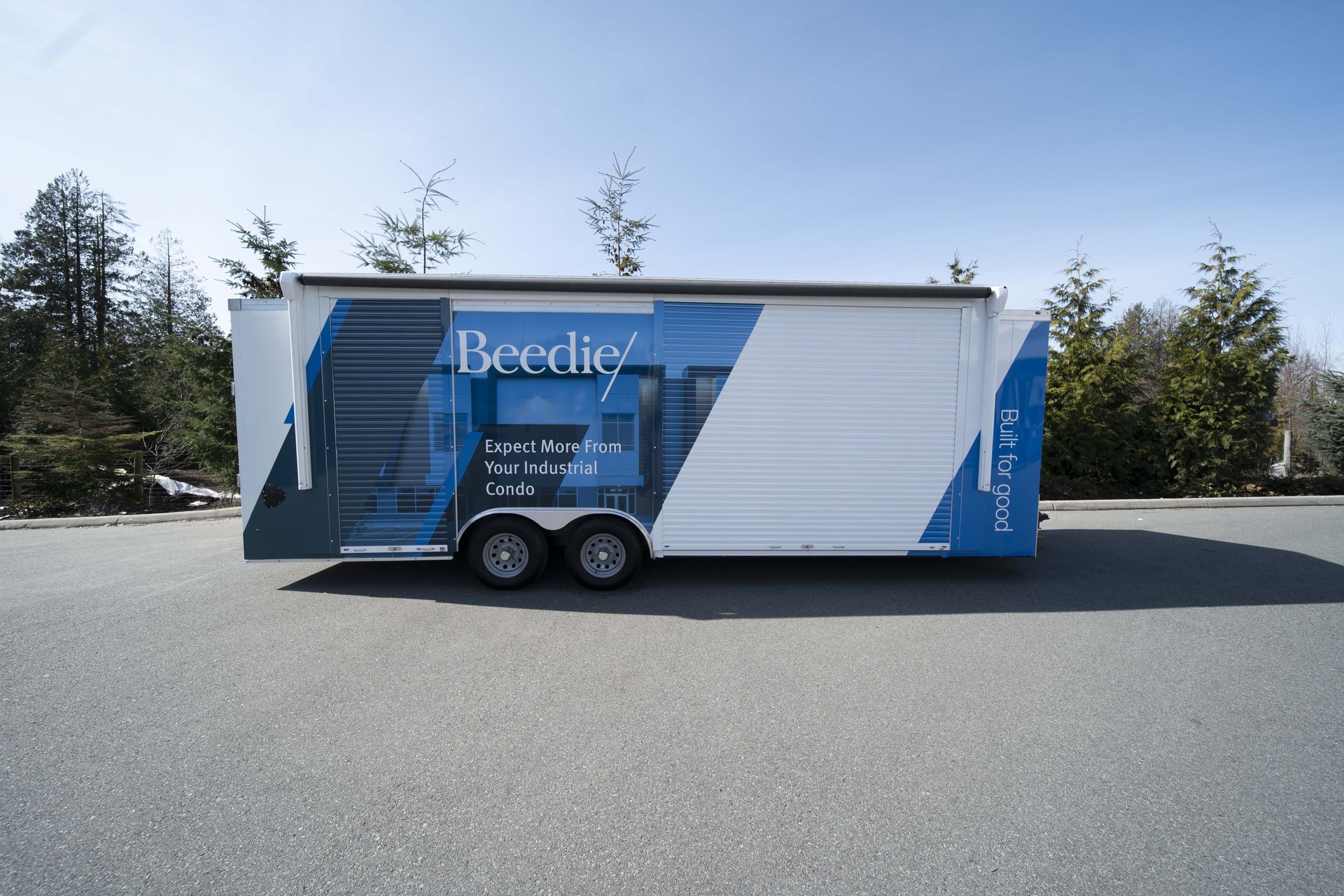
Farmers markets, community events, condo developments, and neighborhood gathering spaces. Reaches consumers in their home territory, which creates a comfort level that formal event settings do not. Beedie, one of Western Canada’s largest developers, uses this approach for community engagement around new developments.
5. Client Headquarters
For B2B, bringing the activation directly to a prospect’s or client’s office is a category all its own. A mobile tour vehicle at a client’s HQ turns a sales meeting into a hosted experience. The vehicle becomes a mobile showroom, demo environment, and hospitality suite that travels to the customer.
Designing the Mix
The strategic question is not “trade shows or mobile tours.” It is which stops on the annual calendar should be trade shows, and which should be mobile activations, and how the two feed each other.
- Use trade shows for the industry-buyer moments where concentration and category presence pay off.
- Use mobile tours for reach into geographies, communities, and audience moments the show calendar does not touch.
- Design the two so they compound: a mobile tour that seeds a market before a regional trade show. Content captured on tour that fuels the trade show booth’s video wall. Leads captured at a show that get a follow-up demo at their HQ from the mobile unit.
The brands that run both consistently find the optimal mix lands somewhere between 30/70 and 70/30 depending on category, buyer, and geography. There is no universal ratio. There is only the annual plan that is designed intentionally rather than defaulted to one instrument.
How to Plan a Direct-to-Customer Route
Route planning for a mobile program is a different exercise than selecting trade shows from a calendar. You are choosing locations, not events. That requires different inputs.
Start with customer data. Where do your highest-value customers and prospects physically concentrate? CRM data, sales territory maps, and market penetration analysis will surface the ranked list of metro areas and neighborhoods worth visiting.
Within each market, identify two or three venue options in each of the five categories above. Scout for logistics fit (parking, power access, foot traffic patterns), permitting requirements, and audience density at target times.
Build the route for efficiency. Markets within driving distance of each other cluster into tour legs that minimize repositioning time. A 10-market tour that zig-zags across a province wastes days and fuel on logistics. A tour that sweeps from Vancouver to Calgary in a logical arc puts more days in front of audiences and fewer on the highway.
The result is a program where every mobile stop is intentional, complements the trade show plan rather than duplicates it, and reaches customers in the moments the show floor cannot.
Trade shows deliver a specific kind of value. Mobile tours deliver a different one. The brands winning at live are the ones using both, on purpose.
Sources
- Sequoia operator data and industry research on direct-to-customer activation performance, cited in Sequoia, The Complete Guide to Mobile Marketing Tours, 2026.
- Center for Exhibition Industry Research (CEIR), trade show attendee behavior data on booth visits and attention duration.
Want the full venue-selection framework, route-planning worksheets, and case studies from brands like Beedie and the Vancouver Canucks? Download The Complete Guide to Mobile Marketing Tours for 62 pages of frameworks, benchmarks, and worked examples.